
There’s a myth that runs through certain online spaces - that escort services in Russian-speaking communities are somehow more intense, more exotic, or more dangerous than elsewhere. It’s not true. What’s real is that people from Russia, Ukraine, Belarus, and other former Soviet states often find themselves working in escort roles abroad due to economic pressures, language skills, and the demand for cultural connection. These aren’t caricatures. They’re women and men trying to survive in unfamiliar systems, often far from home.
Some search engines lead people to dubai escort vip listings, where the language barrier and legal gray zones make it easy for exploitation to hide behind glossy photos and polished websites. But the truth in Moscow, Saint Petersburg, or even Toronto isn’t much different: people need money, and sometimes, the only option that feels available is offering companionship for pay. That’s not a fantasy. It’s a survival strategy.
Why Russian-speaking escorts are often visible abroad
Russian-speaking individuals, especially women, are frequently seen in escort roles in cities like London, Berlin, Istanbul, and Tel Aviv. Why? Because they often speak multiple languages - English, German, Turkish - and they’re culturally adaptable. Many have university degrees but can’t find work that pays enough in their home countries. A job as an escort in Prague might pay ten times what they’d earn as a teacher in Novosibirsk.
Their visibility isn’t because they’re more willing to take risks. It’s because they’re more likely to be documented in Western media. Russian-speaking escorts are often photographed, interviewed, or profiled in blogs and forums. That creates the illusion that they dominate the industry. In reality, they’re just more noticeable.
The difference between companionship and sex work
A lot of people confuse escorting with prostitution. They’re not the same. An escort might go to a concert, dinner, or a business event with a client. They might offer conversation, emotional support, or just someone to walk beside in a crowded room. That’s companionship. Sex is sometimes part of the arrangement, but it’s not guaranteed - and it’s never the only thing.
When someone searches for dubai escort sex, they’re not looking for companionship. They’re looking for a transaction. That’s a different market. And it’s one that thrives in places with weak regulation and high demand. But even in Dubai, where the law is strict, most escort services operate under the radar - not as organized crime, but as individuals trying to make ends meet.
How escort agencies in Dubai actually work
There are dozens of escort agencies dubai that advertise online. They promise luxury, discretion, and high-end clients. Many are fronts. Some are run by local operators. Others are international networks that use fake names, untraceable payments, and burner phones. The women they recruit often arrive on tourist visas, then overstay. Their passports are taken. Their earnings are controlled.
It’s not all like that. There are legitimate agencies in Dubai that treat workers as independent contractors. They offer medical checkups, safety training, and legal advice. But those are rare. Most listings you see online are designed to attract clicks, not to provide real options. The difference between a safe service and a trap is often invisible until it’s too late.

What clients really want - and what they don’t understand
Most clients don’t want sex. They want connection. A woman who remembers their name. Someone who listens without judgment. A person who doesn’t ask for a resume or a bank statement. That’s the real value of escorting - emotional labor. It’s exhausting. It’s isolating. And it’s rarely paid fairly.
Men who pay for escort services often think they’re buying a fantasy. But what they’re really buying is a moment of being seen. The woman on the other end knows that. She’s been told she’s beautiful, smart, desirable - by strangers who never ask her real name. That’s not power. That’s loneliness dressed up as luxury.
The risks no one talks about
Physical danger is real. So is mental health collapse. Many escort workers suffer from PTSD, anxiety, and depression. They’re cut off from family. They’re afraid to report abuse because they’re undocumented. They’re told by agencies that if they speak up, they’ll be deported - or worse.
There are support networks, but they’re hidden. In Berlin, there’s a group called Red Drop that helps Russian-speaking sex workers with legal aid and housing. In Toronto, a nonprofit called Safe Passage offers counseling and job training. But most workers don’t know these exist. Or they’re too scared to reach out.
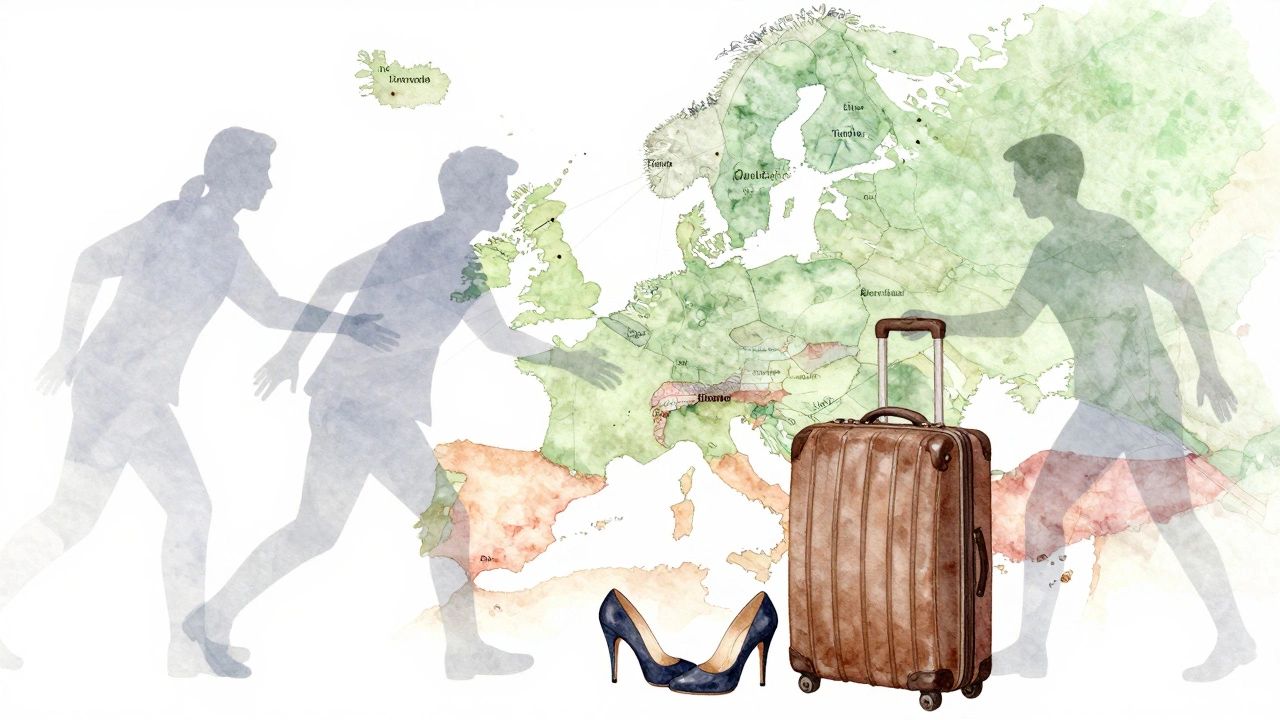
What happens when the work ends?
Many escort workers leave the industry by their early 30s. Some go back home. Others move into modeling, teaching, or small business. A few become advocates. But the stigma follows them. Employers don’t ask about their past - they just assume. Landlords refuse applications. Friends disappear.
There’s no retirement plan. No pension. No healthcare. Just a bank account that might have enough for a one-way ticket - if they’re lucky.
How to recognize a real service from a scam
If a service asks for payment upfront via cryptocurrency or Western Union - walk away. If the website has no phone number, no physical address, and only stock photos - it’s fake. If the person you meet doesn’t know their own schedule or can’t answer basic questions about their availability - something’s wrong.
Legitimate providers give you a clear contract. They let you communicate before meeting. They don’t pressure you. They don’t disappear after payment. And they don’t use phrases like "guaranteed sex" or "exclusive access." Those are red flags, not promises.
Where the real power lies
The myth that Russian-speaking escorts are the "epicenter" of the industry isn’t just wrong - it’s dangerous. It makes people think this is a cultural phenomenon, when it’s actually an economic one. The real epicenter is poverty. The real epicenter is lack of opportunity. The real epicenter is a world where people are forced to sell their time, their presence, their dignity - just to eat.
Until we address those root causes, no amount of regulation, policing, or moral outrage will fix this. The women you see online aren’t the problem. The system that pushes them there is.
And if you’re reading this because you’re curious - ask yourself: what would you do if your salary was cut in half tomorrow? If your family needed medicine? If you had no safety net? That’s not fantasy. That’s the real story behind every profile, every ad, every whispered promise.
Popular Posts



Find Reliable Escort Services in Montpellier
Dec, 5 2025
Merons Foster's Posts?
Jul, 23 2023