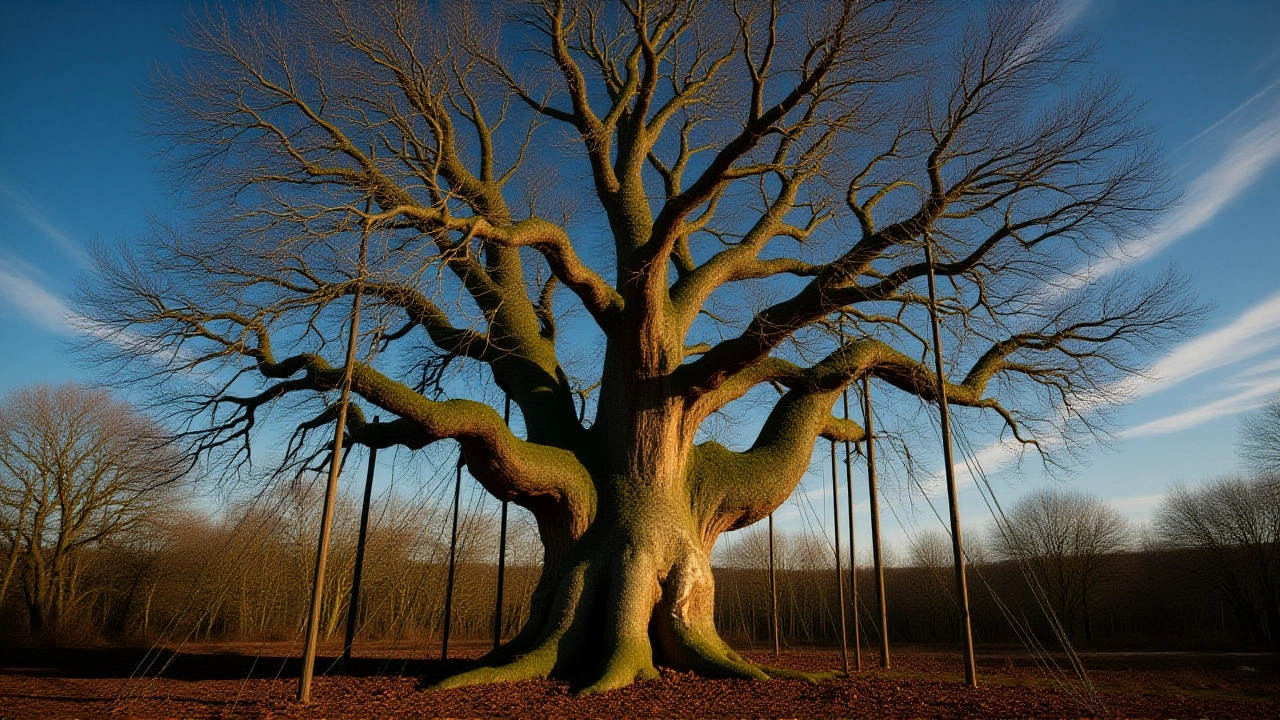
For over a millennium, the Major Oak has stood as a silent witness to history in Sherwood Forest. But this spring, the legendary tree broke its ancient rhythm. It didn’t leaf out. For the first time in roughly 1,200 years, the branches remained bare, signaling what experts now believe is the end of an era. The Royal Society for the Protection of Birds, which manages the forest, confirmed the grim assessment on a recent Thursday: the icon linked to Robin Hood folklore is believed to have died.
It’s a heavy loss for Nottinghamshire and beyond. This wasn’t just any oak; it was Britain’s most famous living monument, drawing millions of visitors who came to touch its massive limbs and imagine the outlaw hiding beneath its canopy. Its death isn’t just a botanical event—it’s a cultural shockwave.
A Complex Combination of Causes
So, what killed a tree that survived wars, plagues, and centuries of weather? Turns out, it wasn’t one thing. It was everything. The RSPB described the cause as a “complex combination of issues,” pointing to a perfect storm of human impact and environmental stress.
Here’s the thing about popularity: it can be deadly. Millions of footsteps over decades compacted the soil around the Major Oak’s roots. Think of it like stepping on wet sand until it’s hard as concrete. That compaction prevented water from reaching the root system, effectively strangling and starving the tree. Experts noted that early surveys showed the roots had been struggling for years due to poor soil conditions.
But wait, there’s more. In previous attempts to save the tree, managers installed cables and poles to shore up its massive, sagging limbs. While well-intentioned, these structural interventions may have contributed to the decline by restricting natural movement or causing internal damage. Add to that the effects of climate change—specifically, heat waves and drought—and you have a recipe for disaster.
The Expert Perspective: Five Hot Summers
To understand the timeline, we need to look at the data. Reg Harris, Director of Urban Forestry (Bury St Edmunds) Ltd, has monitored the Major Oak’s canopy for the past nine years. He saw the decline firsthand.
“The most recent decline has corresponded with five very hot and droughty summers,” Harris explained. He singled out July 2022, when the U.K. experienced record temperatures of 40°C. That month wasn’t just hot; it was historic. Harris added, “Sadly, it seems probable the lack of summer rainfall over the last five years, coupled with the unprecedented high temperatures, has had a significant hand in [the tree’s death].”
This isn’t speculation. It’s a direct link between observable climatic trends and biological failure. The tree simply couldn’t cope with the cumulative stress of dry soil, compacted earth, and scorching heat.
Why This Matters Beyond the Legend
The Major Oak was more than wood and leaves. It was a symbol. Folklore says Robin Hood, England’s most famous outlaw, sheltered under its branches. Whether true or not, the connection cemented the tree’s place in national identity. Visitors didn’t just come for nature; they came for myth.
Now, that myth has a new chapter. The RSPB stated that the dead tree will remain in its familiar spot. It won’t be removed. Instead, it will serve as a natural monument and a habitat for wildlife. Dead trees play a crucial role in ecosystems, providing homes for birds, insects, and fungi. So, while the Major Oak no longer photosynthesizes, it continues to give life.
But the implications go deeper. This event offers harsh lessons for the future protection of the U.K.’s trees. As climate change accelerates, even the oldest, strongest specimens are vulnerable. Soil health, visitor management, and adaptive care strategies need rethinking across all protected sites.
What Happens Next?
There are no plans for immediate ceremonies or memorials, but the conversation has already shifted. Conservationists are urging a review of how high-traffic heritage sites manage their environments. Can we balance public access with ecological preservation? The Major Oak’s fate suggests we haven’t gotten it right yet.
Looking back, the tree’s decline was gradual but inevitable given the pressures. From the initial soil compaction reports to the final bare branches this spring, the signs were there. Now, the focus turns to prevention. How do we protect other ancient trees facing similar threats? The answer lies in better science, stricter visitor controls, and acknowledging that nature, no matter how resilient, has limits.
Frequently Asked Questions
Why did the Major Oak die?
The tree’s death resulted from a complex mix of factors: soil compaction from millions of visitor footsteps, poor soil quality, structural support structures like cables and poles, and severe climate impacts including five consecutive hot, droughty summers. The lack of rainfall and record heat in 2022 were particularly damaging.
Will the Major Oak be removed from Sherwood Forest?
No. The Royal Society for the Protection of Birds (RSPB) has confirmed the tree will remain standing in its original location. It will serve as a natural monument for visitors and continue to provide valuable habitat for wildlife within the forest ecosystem.
How old was the Major Oak when it died?
The Major Oak was estimated to be approximately 1,200 years old. Its age made it one of the oldest and most significant oak trees in the United Kingdom, adding to its cultural and historical significance alongside its association with Robin Hood folklore.
Who announced the death of the tree?
The Royal Society for the Protection of Birds (RSPB), the charity responsible for managing Sherwood Forest, publicly announced that the tree is believed to have died after failing to produce leaves in the spring of this year.
What role did climate change play in the tree's decline?
Climate change played a critical role through extreme weather events. Expert Reg Harris highlighted that five very hot and droughty summers, particularly the record 40°C heat in July 2022, severely stressed the tree. The lack of summer rainfall over the last five years compounded the issue, preventing recovery.
Popular Posts

Merons Foster's Posts?
Jul, 23 2023


Find Reliable Escort Services in Montpellier
Dec, 5 2025